Showing posts with label PMC. Show all posts

Wednesday, 10 March 2021

DAY 1637-1651

Feb 25 - Mar 11

Night has arrived, 

Another day survived,

The medical student returns late.

Dinner has gone to waste,

For they only long to taste, 

That warm embrace of their own bed.


In stress they thrive,

In sickness they strive,

For attendance equates to proficiency,

From dawn to dusk, 

They put on a mask,

To shield others from their own deficiency.


Exams are a priority, 

So say the majority,

The mindset of a student is resolute,

Like modulus in mathematics,

Or temperature in thermodynamics,

Their conviction is thus absolute.


From students to doctors in a flash,

From scratching their heads, to treating the rash,

Repeating to themselves that old lie,

That this will all be worth it before they die.


Years of stress have taken their toll,

The once bubbly figures have lost their soul,

The cost of their dreams was their own health,

Have they never learnt that health is wealth?


Pre exam week lunch with my friends @ Baby Sumo Restaurant
(l-r: Rachel, Myself, Sharifah, Afifah)

Dinner with my cousin Eo @ Arashi, Gurney Plaza
Thanks so much for the wonderful meal!!


Wednesday, 24 February 2021

DAY 1623-1636

Feb 11-24

1) These past few weeks have been rather uneventful, as might be expected given the current pandemic climate. Seeing as there is not much going on in my day-to-day life right now, I thought I might write on a topic that is clearly on everyone's minds right now i.e. vaccination. Specifically, I want to briefly discuss the reasons behind vaccine hesitancy, and how one's decision not to vaccinate may affect the wider population. 

2) Vaccines train your immune system to create antibodies, which are useful in fighting off infections (i.e. bacterial or viral). They consist of either killed or weakened (attenuated) forms of germs, so they do not cause the disease or put you at risk of its complications. As the saying goes, prevention is better than cure. However, not everyone wishes to vaccinate their child, hence the recently-coined term "vaccine hesitancy". As future healthcare practitioners, it is important to understand some of the driving factors behind vaccine hesitancy or outright refusal, so that we may be better prepared to educate the patient and their families.

3) One of the main reasons for vaccine refusal is due to alleged safety concerns. It is no surprise that in the age of the internet, information regarding vaccines is readily available at the click of a keyboard. Moreover, when we consider that the mass media (TV, radio, news), as well as hearsay from family and friends, could also deliver information about vaccines, it is easy to see how the public could be bombarded with information - making it difficult to make a well-informed decision regarding vaccines. One of the main challenges in promoting a healthy discussion on vaccines is the effect of mass media sensationalism. News outlets are much more likely to report and sensationalise a rare, unforeseen side effect of a vaccine, than they are to report the countless other patients who are protected from the disease as a result of that same vaccination. 

4) Let's consider the infamous example of scientific fraud - the supposed association between vaccines and autism in childhood. One faithful day in Feb 1996, now-disgraced ex-doctor Andrew Wakefield was hired to write a journal article on "vaccine damage" in young children (google "Lancet MMR autism fraud" to learn more). His study used just 12 (!) children to "prove" that the MMR vaccine caused them to develop autism. Not surprisingly, he lost his license to practice as a doctor in the UK. Sadly, the damage had already been done. Widely considered "the most damaging medical hoax of the 20th century, it led to a sharp drop in vaccination rates in the UK and Ireland. Following the initial claims made in 1998 (when the results were published), multiple large epidemiological studies were undertaken. Reviews of the evidence by the Centres for Disease Control and Prevention (CDC), US National Academy of Sciences, the UK National Health Service, and the Cochrane Library, all found no link between the MMR vaccine and autism. Physicians, medical journals, and editors have described his actions as fraudulent and tied them to epidemics and deaths worldwide. 

5) So why was his fraudulent research so impactful? Two reasons - firstly, because people generally prefer a good conspiracy theory. There is real science behind why conspiracies are so widely believed - namely i) the desire for understanding and certainty; ii) the desire for control and security; and iii) the desire to maintain a positive self-image. A thorough discussion on this can be found via this link (https://www.psychologytoday.com/intl/blog/talking-apes/201801/why-do-people-believe-in-conspiracy-theories) Secondly, because we are pattern-seeking mammals - we look for patterns and associations where there are none. A popular saying in the field of biostatistics is "correlation is not equal to causation". Just because two things happen at the same time, does not mean that one causes the other to happen. For example, if research were to show that during the summer months, there was an increase in ice-cream consumption, and during this same period, the number of people struck by lightning increases - can we reasonably say that eating ice-cream is a cause of getting struck by lightning? Similarly, if you did a study on children who have autism and you found that they did indeed get vaccinated as a child, can we reasonably say that the vaccines must have caused them to develop autism?

6) As with all medications and surgical procedures, there is a possibility of unwanted complications. For instance, when you take Panadol (paracetamol) for that chronic headache, there is an increased risk you might develop kidney and liver problems, and at higher doses, it may precipitate massive stomach bleeding and severe, life threatening skin reactions, including Steven-Johnson Syndrome, or toxic epidermal necrolysis. Yet we are quite happy to continue taking Panadol, and other over-the-counter medications on a regular basis. So what gives? The answer is simple - we weigh the risk-to-benefit ratio of these medications. The above complications I mentioned are incredibly rare, and usually occur in really high doses. So let's now compare the risk-to-benefit ratio of vaccinations.

7) Vaccines are no different to other medications - they come with their own side effects. Most of these are self-limiting, meaning they resolve by themselves without any further treatment. These include local symptoms, such as swelling, redness, and pain at the site of the injection, as well as general symptoms such as a headache, fatigue, and a mild fever. Quite a lot of people get worried when they see their child being feverish and less active after getting a vaccine. This is understandable, but at the same time, we must remember that having a temperature is a sign that the body is improving its immune defenses! At slightly higher body temperatures, our cells and enzymes are able to work more efficiently, producing more antibodies and at a higher rate, to fight off infection. Now let's consider anaphylaxis, which is a severe, life-threatening allergic reaction that rarely occurs after vaccination. In the US, a grand total of 10 cases of anaphylaxis were reported after over 4,000,000 doses of Moderna COVID-19 vaccines were administered (https://www.cdc.gov/mmwr/volumes/70/wr/mm7004e1.htm). No deaths were reported. This means that your chances of getting an anaphylactic shock after vaccination are quite literally a million to one (to be exact, it is 2.5 per million population, but I'm not about to argue semantics here). Now before someone says even a million to one odds is still too high when it comes to human lives, let's consider the alternative - not vaccinating. Based on the same report, there have been a total of 24,135,690 cases and 400,306 deaths due to COVID-19 in the US. When you compare 400,000 deaths due to COVID-19, against the 0 deaths attributable to the vaccine, then perhaps vaccines may not sound as bad as some people make them out to be...

8) One of the main reasons to vaccinate your child is to provide herd immunity. You may have heard of this before, but basically it's the idea that when a sufficient percentage of a population is vaccinated against an infectious disease, the whole population (including those who are not vaccinated, for various reasons) will be protected against the disease. So why should we care about providing immunity to others who would not vaccinate? To put it simply, there are a group of individuals who simply cannot receive a vaccination as their immune system is too weak (we call them immunocompromised). For example, individuals who have cancer, full-blown AIDS, or are on radiotherapy, chemotherapy, or are transplant recipients. These patients are sadly more susceptible to infectious diseases and yet are ineligible to receive the very vaccines that will provide them protection against these diseases. Instead, they rely on you and me to vaccinate ourselves, so that we may collectively achieve herd immunity, thereby indirectly protecting them from the disease.

9) Some parents may also wonder why vaccines do not completely prevent the infection - i.e. you can be vaccinated against tuberculosis (via the BCG vaccine) and still develop pulmonary tuberculosis in later life. So what's the point of vaccines then? Well, I like to use the analogy of a seatbelt. A seatbelt on its own does not prevent an accident from happening, but in the unfortunate event of an accident, the seatbelt could well save your life, by preventing you from getting hurled out of the vehicle. Similarly, vaccines may not be 100% effective in preventing a dangerous illness from occurring, but it i) significantly reduces the likelihood of it happening, and ii) in the unfortunate event that you do contract the disease, it reduces the severity and duration of the illness. Having said that, vaccines in general are highly effective. For instance, after receiving the second dose of the MMR vaccine (which protects against measles, mumps, and rubella), 99.7% of vaccinated individuals are immune to measles. Similarly, the varicella (chickenpox) vaccine is between 85-90% effective in preventing all varicella infections, but 99.9% effective in preventing moderate to severe chicken pox. 

10) "So what if I do not vaccinate my child? It is a risk I am willing to take." Well, let's consider some of the aforementioned diseases. In the neonatal (newborn) ward, one of the saddest cases to come across is a baby born with congenital rubella. Typically, these babies are born blind in both eyes (due to bilateral cataract) and deaf (bilateral sensorineural deafness) in both ears. They have a 50% risk of heart abnormalities, including a "hole in the heart" (patent ductus arteriosus), and are prone to infections of the layers surrounding the brain (meningoencephalitis). When you consider that this disease is completely preventable (by ensuring that everyone including the mother is vaccinated with the MMR vaccine), perhaps it's easier to understand the pain that healthcare workers go through when they see yet another implication of vaccine refusal. 

11) Also, let's try to remember that it was barely fifty years ago when patients with polio, most already paralysed due to the disease, were strapped for the rest of their lives to huge industry-sized horizontal cylinders called "iron lungs" (just google it), with their entire body up to their neck encased in this metal contraption with only their head sticking out - just to be able to breathe. Since being eradicated (in the US at least) due to the success of a nationwide vaccination programme, polio has since made a resurgence in other countries, including Malaysia, the Philippines, and most of sub-Saharan Africa. Similarly, measles, once considered eradicated in the year 2000 due to mass vaccination, has seen a resurgence in the United States, with over 1,200 cases confirmed by the CDC in the year 2019. 

12) So what can we do to educate the public regarding vaccines and their use? First and foremost, as healthcare practitioners, do not brush off the parents' concerns. Acknowledge and empathise with them. Try to understand how they must feel, overburdened with information and a sense of guilt and uncertainty in deciding what is best for their child. Secondly, do not demonise or condemn those who refuse to vaccinate their children. Instead, point them to reputable and verifiable sources of information, such as the Centre for Disease Control and Prevention (CDC), World Health Organisation (WHO), and your country's own Ministry of Health. Thirdly, as a parent, talk to your healthcare provider. They will have firsthand experience in counselling parents regarding vaccinations, so they should be able to answer most of your questions. 

13) Given the current situation, we are in desperate need for mass vaccination against the COVID-19 virus, so that we may return to a semblance of normalcy once everyone develops immunity. Let's all do our part to ensure that we remain protected, and by extension, that we protect our loved ones, and those around us, from this pandemic. I would like to leave you a quote by Jeffrey Kluger, editor-at-large for TIME magazine, " Vaccination saves lives. Fear endangers them. It's a simple message parents need to keep hearing". And with that, I end today's blogpost. Thank you for visiting, take care, and stay safe. Cheers! 


Sunday, 21 April 2019

DAY 949-962

Apr 8 - 21

1) Where to even begin? So much has happened in the past two weeks that I have had trouble remembering everything that we did. Public Health rotation is honestly my favourite of the three, mainly because we get to go on excursions literally all across the mainland. And also because it is really rather chill, with the health inspectors and environmental officers asking us to have a nice breakfast before we start the day!

2) So the (previous) week kick-started with us (Group B1) finally getting our group photo for medicine rotation. We had wanted to take it at the end of the medicine rotation rather than at the beginning of public health, but because some of us forgot to bring our lab coats it had to be postponed. Really happy to have been part of such a fantastic and friendly team! Anyways, the next event was the Medicine Quiz organised by PALS (Peers Assisted Learning Society). We were a last-minute scratch team consisting of two RCSI students (Zi Yan and myself) and two UCD students (Su Wei and Sim) - maintaining that yin and yang balance haha. Anyway, we finished Top 5 without preparing - an achievement! Many congratulations to Team Grey Matter for clinching first!

3) After the quiz, I went out with Esther, Melvin, and Melissa, to meet Melissa's parents and relatives. We went for a nice outing at the night stalls near Gurney. It was a lively night out, but by the time I got back, I was so exhausted and slept through the morning! Luckily I had the good sense to set the alarm beforehand... Our main Public Health Posting is in Klinik Kesihatan Seberang Perai Tengah (or Seberang Perai Tengah Health Clinic). Mr. Tan, a certified food handler trainer and ex-health officer, is in charge of us for the duration of our posting. The first thing he did when we met him was to ask us to follow him for breakfast at a mamak stall. Throughout the postings, he has been really passionate about showing us the various departments in public health, and even went as far as to bring us to two food factories - just so we could learn more about food safety and quality!

4) So far during the posting, we've attended vector control - basically knocking on the doors of residents of high-risk areas to inspect their premises for signs of mosquito larvae - specially Aedes larvae - which are responsible for the transmission of dengue fever. Also, we've made a trip to the Botanical Gardens, where we got the chance to see the environmental control of malaria. These include stone packing methods, automated drum/siphon sluices, agitation wells, subsoil drainage, and larviciding. Besides, we've been to Indah Water Konsortium - the national sewage company in Malaysia. It was really interesting to see how waste water is harvested in large batches - called SBR (sequencing batch reactors) - to form effluent ("clean" water to be released to the sea) and sewage sludge - which is then concentrated further before being deposited in landfills or recycled as fertiliser.

5) Last week, Prof Richard had a special invitation for all of us - a career talk by the RCSI Class of 1991 - his graduating batch! It was really interesting and inspiring to see the brilliant surgeons, specialists, and doctors give insight into their various paths, as well as motivate us students to not give up and keep trying. In the span of these two weeks, we also celebrated not one but two birthdays - Melvin's and Melissa's! We had a fun time surprising each and subsequently going out together for dinner with them. Finally, our latest public health excursion was to the health complex in Butterworth, specifically the Food Quality Lab - which we went to last Wednesday. We saw the various machines and tools that they used for chemical analysis of food samples - mostly resembling a medicinal chemistry lab. Then, we proceeded to Guang Ren Leisure Home, where we learnt more about environmental health.

6) It has been a very productive two weeks (not to mention tiring!), and I learnt so much about how our healthcare system works on a large scale. We have another two weeks of posting to go, and then we will have our end-of-semester exams for Public Health (worth 50%) and Medicine (worth 10% if I'm not mistaken). That is it for this edition of my blog, thanks very much for tuning in, and have a lovely week (or should I say two weeks) ahead. Cheers! :D

Group B1 Medicine Rotation:
l-r: Amirah, Ray, Mahitha, Myself, Esther, Varin, Hajar, Luqman, Ruth, Edward, Helmi

I couldn't have asked for better teammates - thanks so much for the experience!


Myself, Su Wei, Zi Yan, and Sim - URMC buddies!
PALS Medicine Quiz Night :)
The bond of RCSI and UCD students is one that cannot be broken...

Really nice meeting Melissa's family for a late supper :)
 
Lunch with Denise at Coffee Elements - really nice deal at only RM9.90!

Starbucks cuz were feeling like a million bucks XD
 
First day of Public Health posting -
Klinik Kesihatan Seberang Perai Tengah (Seberang Perai Tengah Health Clinic)

Mr. Tan brought us to Restaurant Nasmir for a nice hearty breakfast - 
before our first session with Aedes vector control


KFC's loaded potato bowl for lunch - right after our first day of Public Health posting

Klinik Kesihatan Jalan Perak (Perak Road Health Clinic)
for our visit to the Vector Lab - where they perform BFMP (blood film for malaria parasites)
Photobombed by Helmi and Esther :))

 Visit to the Penang Botanic Gardens
(specifically to see the various methods for environmental control of Malaria vectors)


A friendly monkey by the road...

l-r: Automatic siphon sluice, agitation wells, and anti-malaria public baths

Even more methods of vector control
(it was raining heavily here which made it difficult to take nice pics :p)

Inspection chamber where pipes are inserted to ensure no stasis of water flow
(which could provide a suitable environment for Anopheles mosquito to breed)

It was raining rather heavily here


An automatic siphon sluice

When the tank is full, the siphon sluice basically acts like a huge flushing system by pumping (siphoning) water downstream. This has the effect of carrying away all mosquito larvae on the water surface, as well as agitating the water enough to prevent oviposition of potential mosquito vectors - yet another way for mosquito control

The siphon sluice in action!
(the pic was taken towards the end after it had lost most of its strength XD)

A beautiful pond right in the middle of the Botanic Gardens - unfortunately also a huge potential breeding ground for certain types of mosquitoes - particularly the Culex genus (responsible for Japanese Encephalitis B and lymphatic filariasis)


What a beautiful sight to behold!
(taken at the entrance to the Penang Botanic Gardens)

Banana leaf rice at Sri Anada Bahwan Restaurant - 
mid-break during Saturday lessons for Family Medicine

Batu Ferringhi Penang Island Sewage Treatment Plant
- @ Indah Water Konsortium

No better way to start the day than with a presentation - welcome to Indah Water :)


Prof. Richard's Class of 1991 RCSI Alumni
- for Career Talk and Symposium

Mr. Tan brought us to a bread factory - where we learnt all about food quality and safety:
We also left with plenty of piping fresh bread! :D

Coffee powder factory was next on the list...

Coffee beans before being fried in huge vats


 Ray showing us the random handful of coffee beans he received from one of the workers :)

The final stage is packaging the coffee beans ^^

Roasting the beans up to around 200 degrees Celsius is no joke!

This is the end result of the beans - it needs to be cooled first before grinding to powder and packaging :)


Surprising Melvin at his apartment
l-r: Esther, Kuhan, Melissa, Emma, Zi Yan, Melvin (the birthday boy!), myself, Hong, Khee Heng


Dinner at some fancy-schmancy restaurant whose name I can't quite remember XD


Their spaghetti carbonara was really quite good tho <3

Surprising Melissa for her birthday!
l-r: Sim, Emma, Varin, Vincent, Myself, Melissa (birthday girl!), Kuhan, Stephanie, Jason, Esther, 
Zi Yan, Melvin, Khee Heng, Ice, Hong)

I had the good sense of taking a picture of the restaurant so I remember the name XD
Ko. B. Q is its name then :)

All-you-can-eat Korean style BBQ buffet at only RM30 (€6)! What a steal :)

We wasted no time in ordering a smorgasbord of marinated meat, pork, and chicken etc.

Nothing like finishing off with dessert :)

Slightly dark group pic


Our bus to take us to the Food Quality Lab in Butterworth

After almost an hour, here we are!

Yet another one of those presentations - what a treat - just seat back, release, and let the passive learning take place! ^^

Syringe for mass spectrometry if I remember my medicinal chemistry correctly XD

A road trip we will go!
(myself, Sim, with Gareth and Faezah behind us)


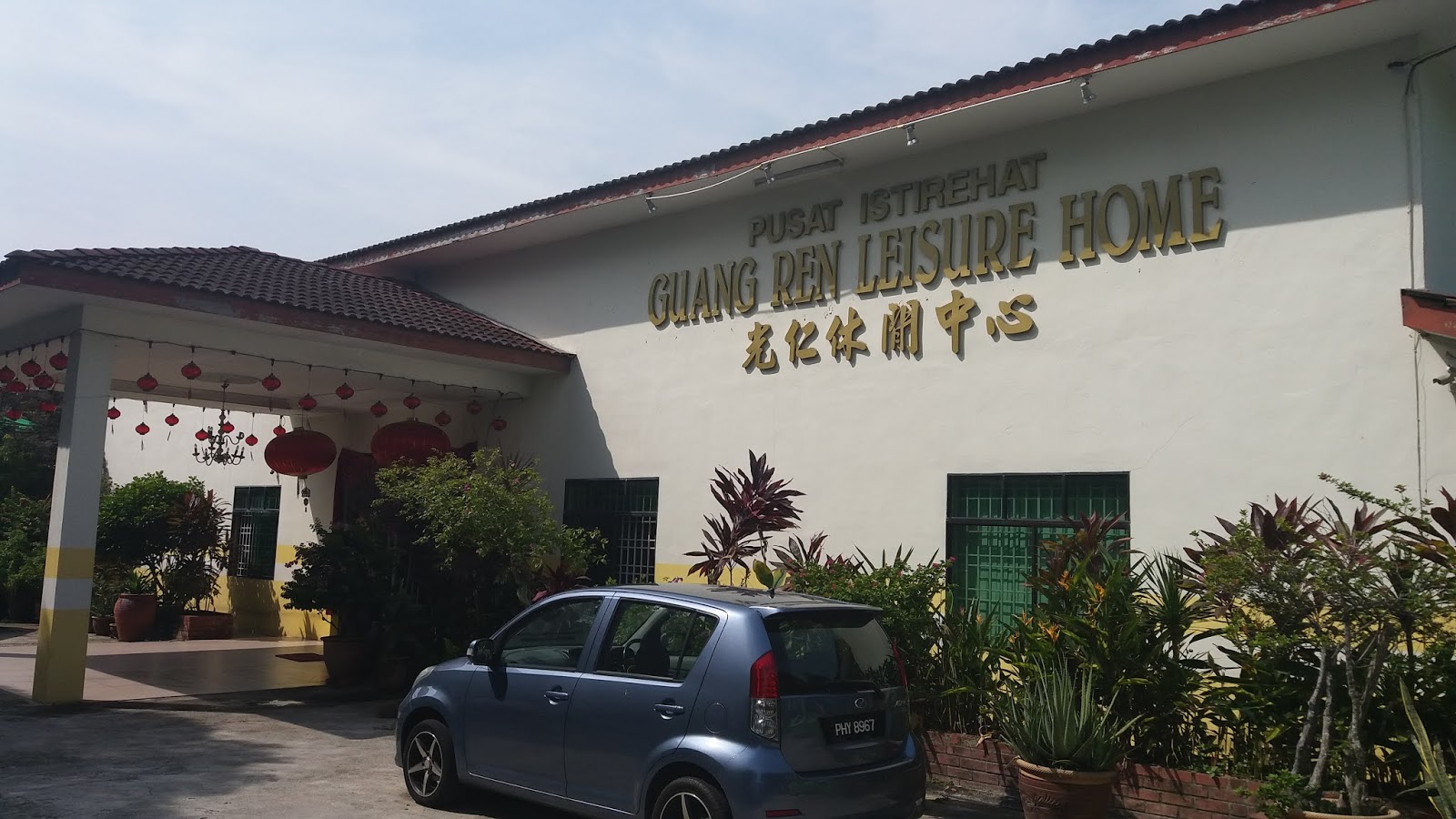
Guang Ren Leisure Home


Group photo with the whole Public Health group :)

One of those days that calls for Secret Recipe

After our second tutorial on SPSS software, Sim suggested that we try out a famous char siew rice shop. Didn't disappoint at all!

I especially loved their hot and sour soup - which went really well with the richness of the siew yoke (roast pork belly)!

It doesn't look like much, but the flavour that this dish packs is simply out-of-this-world!